
- Dec 4, 2024
Duffy Null: When Blood Type Becomes A Barrier to Healthcare
- Anita A and Sarah T
- Medicine
- 0 comments
Every day, thousands of lives depend on blood transfusions to survive surgeries, manage chronic conditions or recover from traumatic injuries. In fact, one in seven people entering the hospital will need blood, making a reliable and compatible blood supply essential for effective healthcare. But for many Black patients, finding compatible blood is an uphill battle, complicated by various genetic differences and a healthcare system that hasn’t fully addressed their unique needs.
This blood type ‘discrimination’ is hidden in the world of healthcare, with Black patients often facing delays and limited options when they need blood the most.
Understanding Discrimination In Healthcare
Discrimination is the act of treating someone less favourably than another person, based on a particular characteristic. In healthcare, discrimination can be based on many factors, such as age, race or religious belief. Its consequences can be life-threatening, contributing to delayed
For example, nearly two-thirds (65%) of Black respondents to a 2022 British Medical Journal study reported encountering discrimination from medical professionals. Among Black people between the ages of 18 and 34, this increased to 75%. Many of the participants felt that practitioners dismissed or minimised their pain, particularly Black women, who are often burdened by the stereotype of the ‘strong Black woman/man’. This harmful stereotype falsely assumes they can endure more physical and emotional pain than others, leading to unequal care and poor outcomes.
Such systemic biases not only influence how Black patients are treated, but also intersect with biological factors, making adequate care more complicated.
The Evolution of Blood Typing
Understanding blood typing has been a journey spanning centuries, with its roots in trial and error. Assisted by surgeon Henry Cline, English physician James Blundell conducted the first human blood transfusion in 1818. The blood of several donors was injected into a gastric carcinoma (a disease where cancer cells form in the epithelial cells of the stomach lining) patient over a period of five minutes in lesser amounts. After two days, the patient showed improvement, but died.
When Blundell performed a blood transfusion ten times, he had a success rate of around 50%. However, in 2023, transfusions in the UK were associated with a risk of death and serious harm of in 1 in 58,000 and 1 in 11,000 respectively, according to the Serious Hazard of Transfusion (SHOT) scheme.
What happened between the 1800s and 2000s that reduced the number of deaths or serious harm because of a blood transfusion?
The turning point came in 1901 when Austrian immunologist Karl Landsteiner. He won the 1930 Nobel Prize for Physiology or Medicine for the classification of human blood groups and the development of the ABO blood system. In 1900, Landsteiner decided to see what would happen if healthy blood was combined. At the time, the cause of agglutination (the clumping of particles) because of mixing blood was unknown.
Landsteiner discovered that agglutination occurs because of an immune response to donated blood cells, which can differ between individuals depending on which antigens (complex proteins that function as identifying markers) they contain. This would cause the host’s immune system to attack the unknown blood cells, considering them to be foreign and dangerous. This would cause them to burst, clogging up the recipient’s blood vessels.
While Landsteiner’s work addressed some universal challenges, it did not account for the unique blood types found in specific populations, such as the Duffy null phenotype common among individuals of sub-Saharan African descent.
What is Duffy Null?
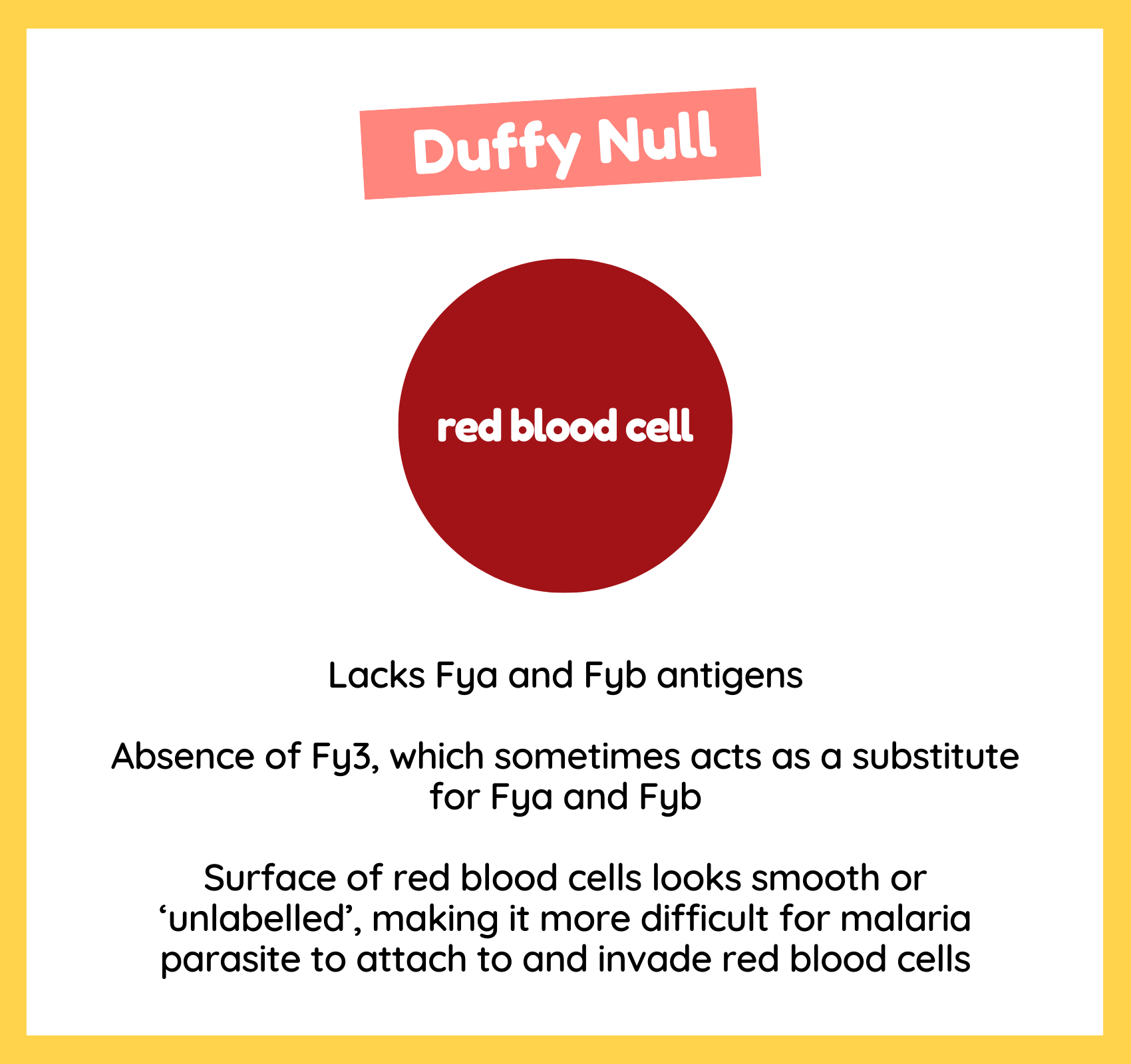
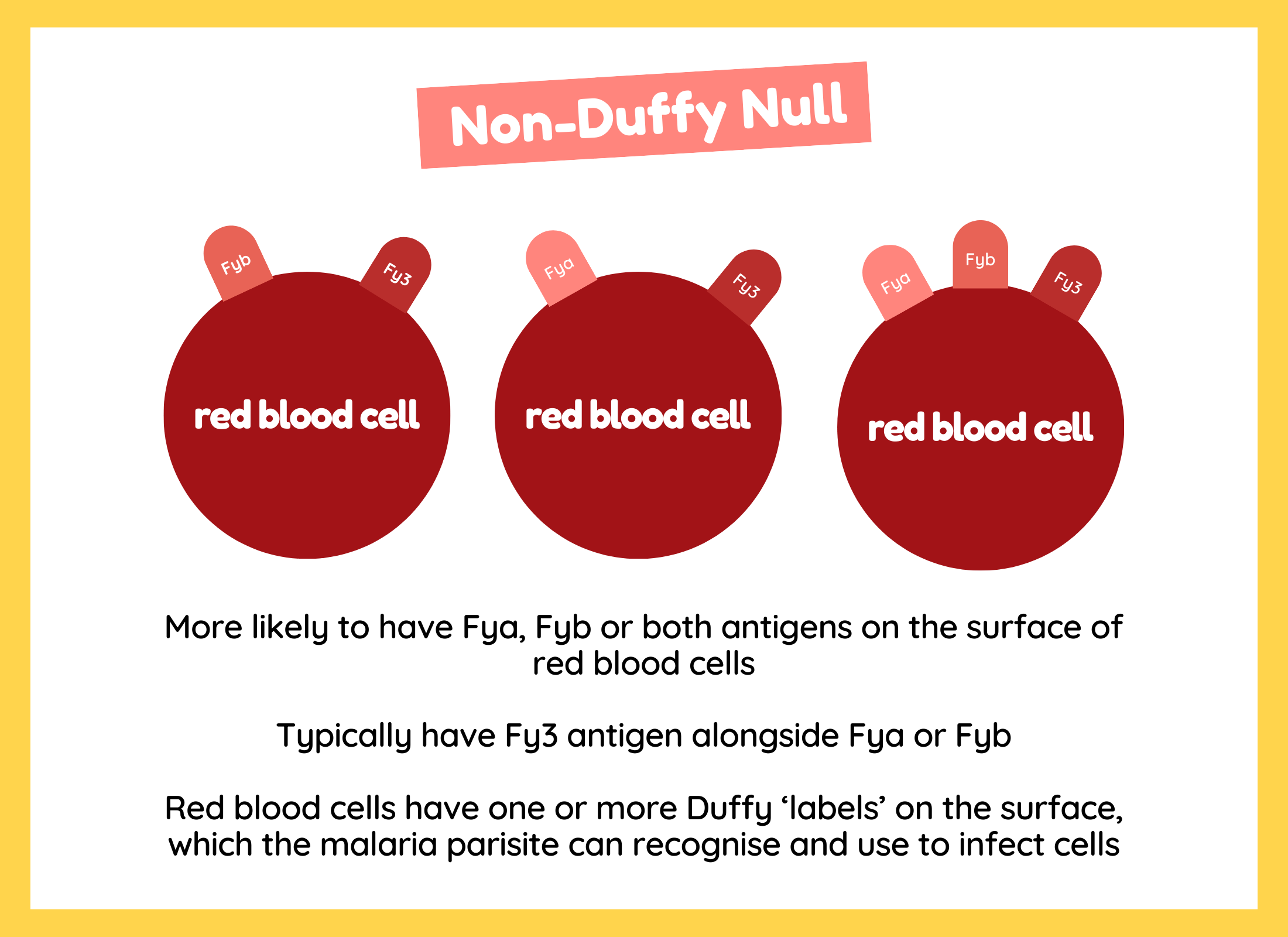
The Duffy null blood type, also known as the “Duffy-negative” phenotype, is extremely common among people of sub-Saharan African ancestry, where it is present in 80% of Black African/Caribbean populations in the UK and 65% of African Americans, far more common than people realise. The unique blood type is defined by the absence of Duffy antigens on red blood cells; this is a trait thought to have evolved as an adaptation to malaria. This mutation prevents infection by Plasmodium vivax, a major malaria-causing parasite that uses the Duffy null antigen to enter red blood cells. As a result, this blood type has become almost universal in regions where malaria has been historically prevalent, demonstrating how genetics can adapt in response to environmental pressures such as disease.
However, this adaptation has unintended consequences in modern medicine, particularly in the world of blood transfusions.
Challenges in Blood Transfusions
Blood transfusions are a life-saving procedure, where blood is transferred from a donor to a recipient. They can be done for many reasons, such as treating severe anaemia, trauma, surgery or chronic diseases that require regular replenishment of red blood cells. For a transfusion to be successful and safe, the blood of the donor and recipient must be compatible to prevent any immune reactions.
Due to the unique nature of the Duffy null phenotype, when it comes to blood transfusions, it can pose challenges. Their immune system may recognize these antigens as foreign. Therefore, individuals with this blood type produce antibodies against the Duffy antigen if they were to receive blood containing it, which can lead to severe complications such as hemolysis, the destruction of red blood cells. This reaction can cause kidney damage, anaemia or fever. This makes finding compatible blood donors difficult, especially given the rarity of the Duffy-null phenotype outside specific populations.
Despite these challenges, advancements in medical technology and advocacy offer hope in addressing the unique needs of patients with rare blood types like Duffy null.
Red Blood Cell Genotyping
Modern blood banks often used advanced techniques to identify Duffy antigens, ensuring better compatibility during transfusions. One approach is red blood cell genotyping, which complements traditional serological methods.
Many significant red blood cell antigens are determined by single nucleotide polymorphisms (SNPs) within specific genes. By detecting these SNPs, genotyping allows accurate prediction of red cell phenotypes, even in cases where antigens may not be expressed on the cell surface. This method is especially beneficial for those who require frequent transfusions! By identifying the genetic basis of blood group antigens, RBC genotyping helps in providing precisely matched red blood cells, minimising the risk of an immune response. This is an invaluable resource for managing patients with rare blood types such as Duffy null!
Raising Awareness
Raising awareness about the Duffy null blood type is essential in addressing the unique healthcare challenges faced by individuals with this phenotype. Medical societies such as The American society of Haematology are actively trying to educate healthcare professionals about the implications of Duffy null, and they aim to help doctors better understand the connection between Duffy null and other health issues such as “benign ethnic neutropenia” (BEN), something that primarily affects those of African and Middle Eastern descent.
One of the main goals of advocacy organisations such as ASH is to ensure patients with the Duffy null blood type are properly recognised in clinical settings. ASH’s proposed project aims to ensure that Absolute Neutrophil count (ANC) reference ranges are adjusted to reflect the unique health profiles of individuals with the Duffy null blood type. This is an important step in providing optimal care, as individuals with the Duffy null blood type often have naturally lower neutrophil counts, which may lead to misdiagnosis if not properly understood. The project also wants to empower healthcare systems to set new ANC ranges for people with Duffy null, and also to share their findings with the wider medical community. Another one of the ASH’s goals is to push for lower ANC thresholds for clinical trials and to integrate testing for those with the Duffy null blood type in early trials, leading to more accurate and inclusive research! A lot more can still be done in medicine all over the world to be more inclusive to those with varying blood types.
As the UK's population becomes increasingly diverse, it is crucial that the NHS embraces inclusivity, ensuring it accommodates for the wide range of genotypes found across different communities.
References
Compton, A., & Haber, J. M. (1960). The duffy blood group system in transfusion reactions: A review of the literature and report of four cases. Blood, 15(1), 186–191. https://doi.org/10.1182/blood.v15.1.186.186
Cutbush, M., & Mollison, P. L. (1950). The Duffy blood group system. Heredity, 4(3), 383–389. https://doi.org/10.1038/hdy.1950.31
Dk. (2021). The Medicine Book: Big Ideas Simply Explained. Dorling Kindersley Ltd.
Fun facts about blood - LifeServe Blood Center. (n.d.). https://www.lifeservebloodcenter.org/education/fun-facts-about-blood/
Iacobucci, G. (2022). Most black people in UK face discrimination from healthcare staff, survey finds. BMJ, o2337. https://doi.org/10.1136/bmj.o2337
Legge, S. E., Christensen, R. H., Petersen, L., Pardiñas, A. F., Bracher-Smith, M., Knapper, S., Bybjerg-Grauholm, J., Baekvad-Hansen, M., Hougaard, D. M., Werge, T., Nordentoft, M., Mortensen, P. B., Owen, M. J., O’Donovan, M. C., Benros, M. E., & Walters, J. T. R. (2020).
The Duffy-null genotype and risk of infection. Human Molecular Genetics, 29(20), 3341–3349. https://doi.org/10.1093/hmg/ddaa208
Merz, L., Achebe, M., Merz, L., Story, C. M., Alyson L. Dickson, Duffy Absolute Neutrophil Count (DANC), Merz, L., Osei, M. A., Story, C. M., & Duffy Null–Specific Absolute Neutrophil Count Reference Ranges. (2023). Reconsideration of reference ranges: Duffy Absolute Neutrophil Count (DANC). https://www.hematology.org/-/media/hematology/files/dei/duffy-null/anc-by-duffy-status-health-care-system-application.pdf
NHS. (2023, November 27). Blood transfusion. nhs.uk. https://www.nhs.uk/conditions/blood-transfusion/
TED-Ed. (2015, June 29). Why do blood types matter? - Natalie S. Hodge [Video]. YouTube. https://www.youtube.com/watch?v=xfZhb6lmxjk
The 2023 Annual SHOT Report. (2024). Serious Hazards of Transfusion (SHOT) Steering Group. https://doi.org/10.57911/605r-em59
Why patients receive blood transfusions. (n.d.). https://www.redcrossblood.org/donate-blood/blood-donation-process/what-happens-to-donated-blood/blood-transfusions/reasons-transfusions.html